

When the UK left the EU, procurement rules were always going to drift apart eventually. What's new is the speed and scale of that drift. Since 24 February 2025, the UK's Procurement Act 2023 has replaced three decades of EU-derived, harmonised rules with a framework that is now distinctly British. For anyone bidding for contracts in both markets, this is the real inflection point. "Slightly different" no longer covers it. The two systems are genuinely diverging.
From Harmonisation to Divergence
For three decades, UK procurement rules were essentially the EU rulebook with a Union Jack sticker on it. Post-Brexit, that started to change — gradually at first, then decisively with the 2023 Act. The new UK framework folds more than 350 separate regulations into a single, coherent law. It introduces new procurement objectives, recalculates how thresholds are set and rewrites how procedures actually run. The practical takeaway for suppliers: stop assuming what works in one market works in the other.
Where the Rules Actually Diverge
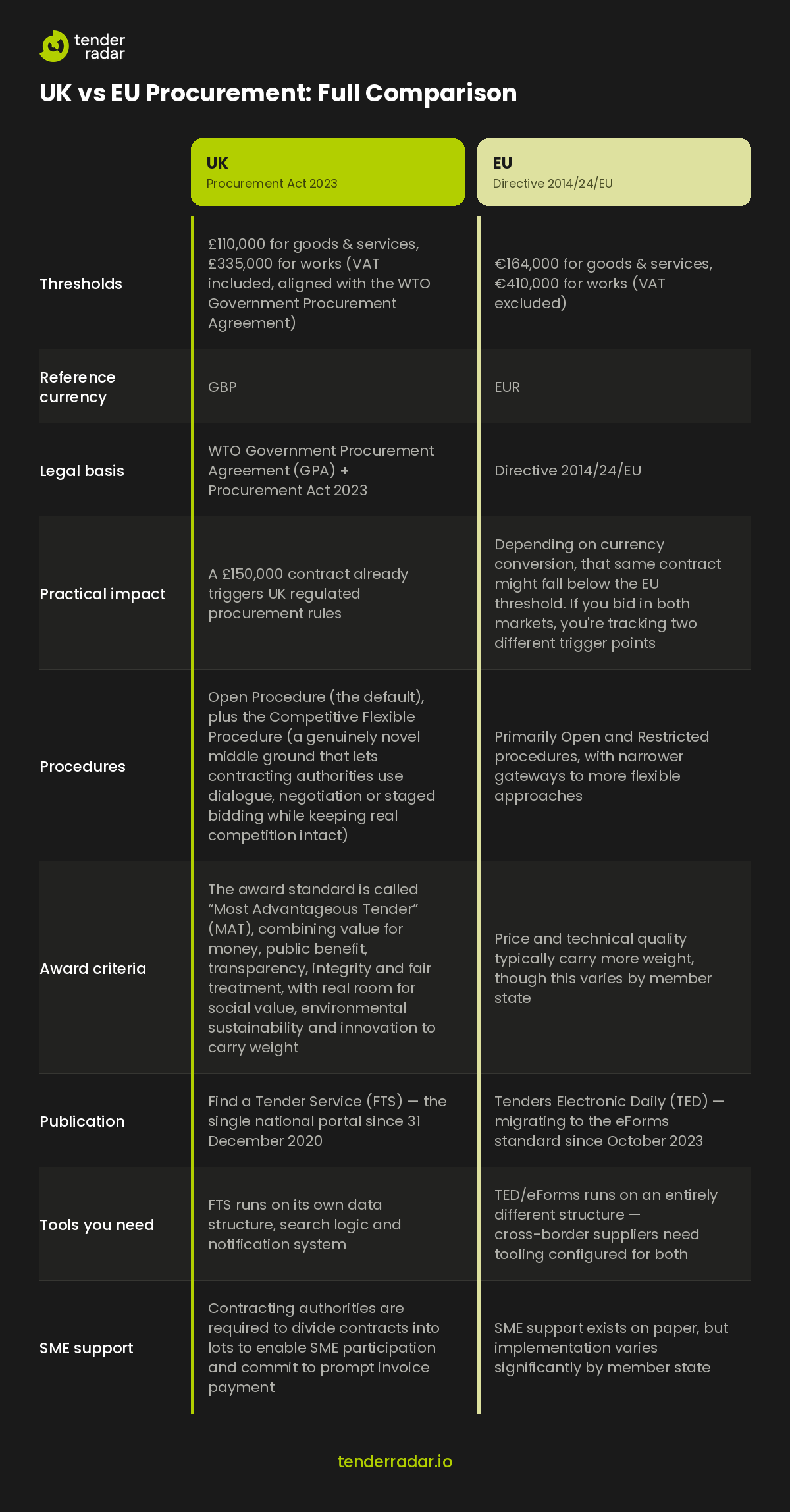
The table below breaks down exactly where the two frameworks part ways — from the euro-versus-pound threshold math, to how bids get evaluated and which portal you need to be watching. Some of these differences are cosmetic. Others (like thresholds and award criteria) can change whether you bid at all, and how you shape your proposal if you do. Here's the side-by-side:
OK, But What Does This Actually Mean?
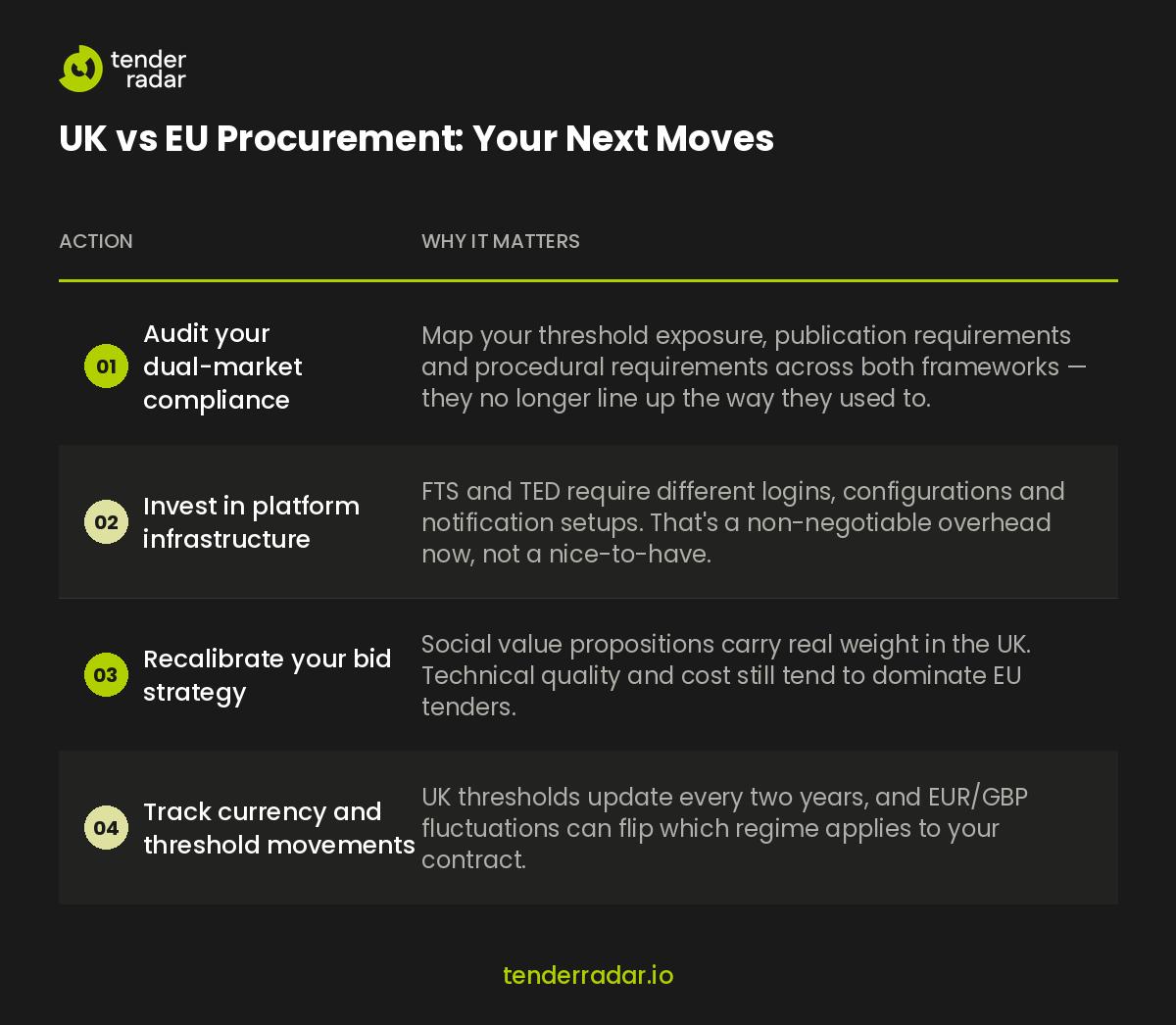
Once you know where the frameworks diverge, the next question is what to actually do about it. The four moves below aren't abstract compliance advice — they're the concrete adjustments that separate suppliers who get caught out by the shift from those who turn it into an advantage.
The Opportunity Hiding Inside the Divergence
Regulatory divergence usually gets framed as a compliance headache. It is, but it’s also an opening. Suppliers who master both frameworks gain a real edge, because you're not competing in two identical markets — you're competing in two different ecosystems, each with its own rules, incentives and decision criteria. That complexity is a burden for most. But for the suppliers who learn to move through it, it's a moat.
Governments spend trillions on public contracts every year. Most suppliers are bidding in the dark. Tender Radar turns the lights on.